Google Launches Nano Banana 2: Flash-Speed Image Generation With Production-Grade Quality
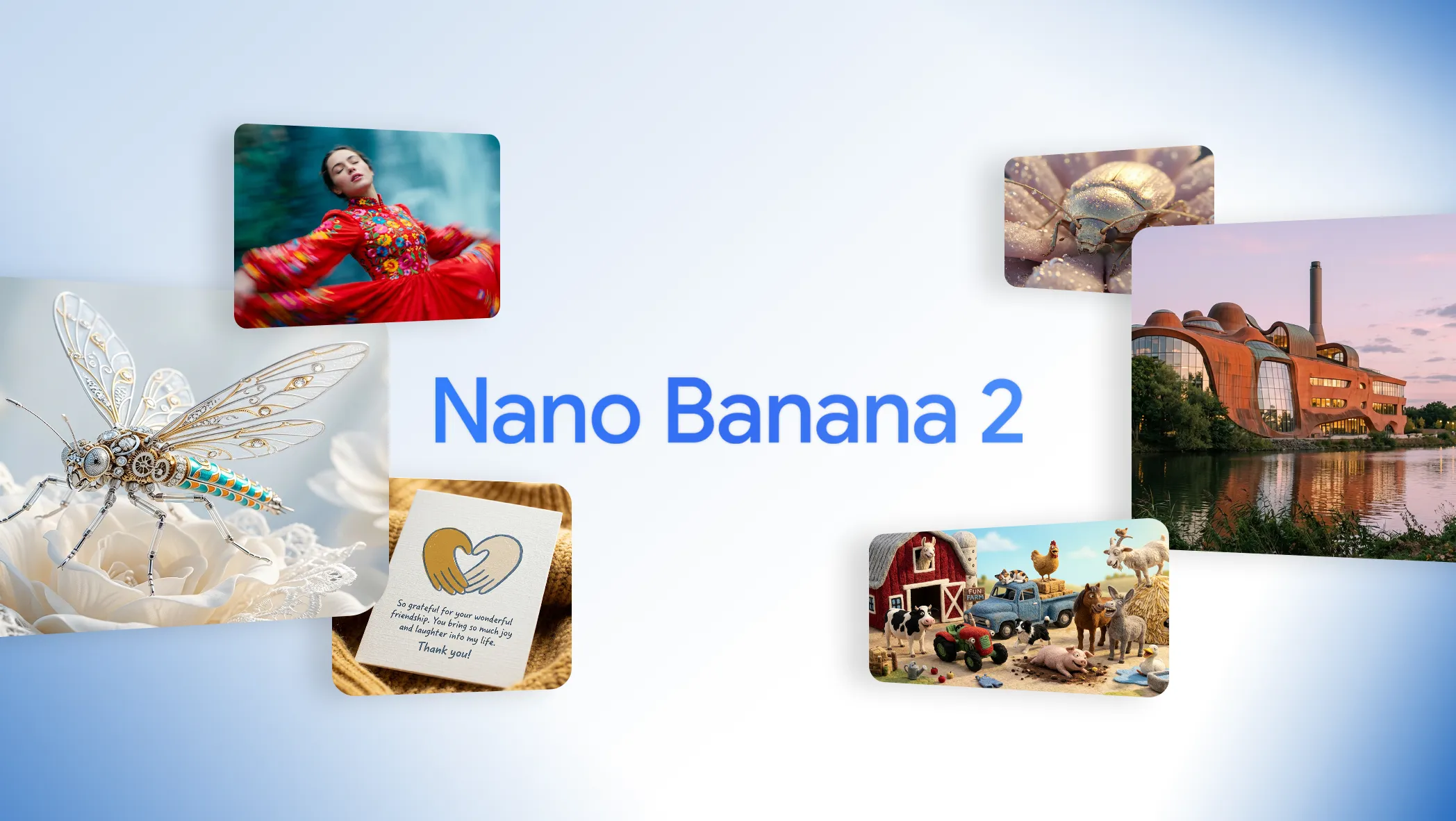
Google announced Nano Banana 2, the latest version of its image generation model. The model delivers a combination that has been difficult to achieve in AI image generation: fast inference speed, high visual quality, and strong understanding of real-world concepts. It operates at what Google describes as "Flash speed" while producing images suitable for commercial and production workflows.
What Changed From the First Version
The original Nano Banana Pro launched alongside Google Flow and quickly became the image backbone for multiple Google products. Nano Banana 2 builds on that foundation with three key improvements: deeper world knowledge, better subject consistency across multiple generations, and output quality that meets production specifications without post-processing.
World knowledge refers to the model's understanding of how real objects, environments, and physical properties look and interact. A model with strong world knowledge produces images where lighting behaves realistically, materials have correct textures, and spatial relationships make sense. This is particularly noticeable in architectural scenes, product photography, and images involving complex materials like glass, metal, or fabric.
Subject Consistency
One of the persistent challenges in AI image generation has been maintaining a consistent appearance for a subject across multiple images. Generate the same character twice and you often get noticeably different results. Nano Banana 2 addresses this with improved subject consistency, meaning a character, product, or object maintains its visual identity across separate generations.
This matters for any workflow that requires visual continuity: product catalogs where items need to look identical from different angles, character design where a figure must remain recognizable across scenes, or brand content where consistency is non-negotiable.
Speed and Efficiency
The "Flash speed" designation is significant. Image generation models have generally forced a tradeoff between quality and inference time. Higher quality models take longer to generate. Nano Banana 2 claims to break this tradeoff, producing production-grade images at speeds comparable to Google's lightweight Flash model tier.
Fast inference has practical implications beyond just saving time. It enables interactive creative workflows where a user can iterate on prompts and see results in near real-time. It also reduces the compute cost per image, which matters at scale for applications generating thousands of images per day.
Production-Ready Specifications
Google emphasizes that Nano Banana 2 output meets "production-ready specs." In image generation, this typically means sufficient resolution, correct color space handling, clean edges without visible artifacts, and consistent quality across different prompt types. The distinction matters because many AI-generated images require manual cleanup before they can be used in print, advertising, or product listings.
A model that produces genuinely production-ready output reduces or eliminates that post-processing step, which is where much of the cost and time in AI-assisted creative workflows currently sits.
Where It Fits in Google's AI Stack
Nano Banana 2 slots into Google's broader generative AI ecosystem alongside Veo for video and Lyria for audio. It powers image generation inside Google Flow, the unified creative workspace that Google updated earlier this week. The tight integration means improvements to Nano Banana directly improve every product built on top of it.
The model is also available through Google's API, making it accessible to developers building their own applications. This positions it as both a consumer-facing feature and an infrastructure component for third-party tools.
The Competitive Landscape
Image generation is one of the most competitive segments in AI. Models from multiple companies have achieved impressive quality benchmarks. What differentiates Nano Banana 2 is the combination of speed, quality, and integration. Producing excellent images slowly, or producing fast images with visible quality compromises, are both solved problems. Doing both simultaneously at production scale is harder, and that is the gap Nano Banana 2 targets.
For anyone using AI image generation in production workflows, the takeaway is straightforward. The bar for what a lightweight, fast model can produce has moved up significantly. Speed no longer has to come at the expense of quality, and that changes how creative pipelines can be designed.